Augmented Reality made easy for E-commerce retailers: Polymuse
Team
Riya Daiya (Me)
Michelle Wang
Tatum Fry
Yumi Kawagoe
Tools
Figma
Autodesk Maya
My Roles
Project Manager
UX Researcher
UX Designer
Timeline
4 months
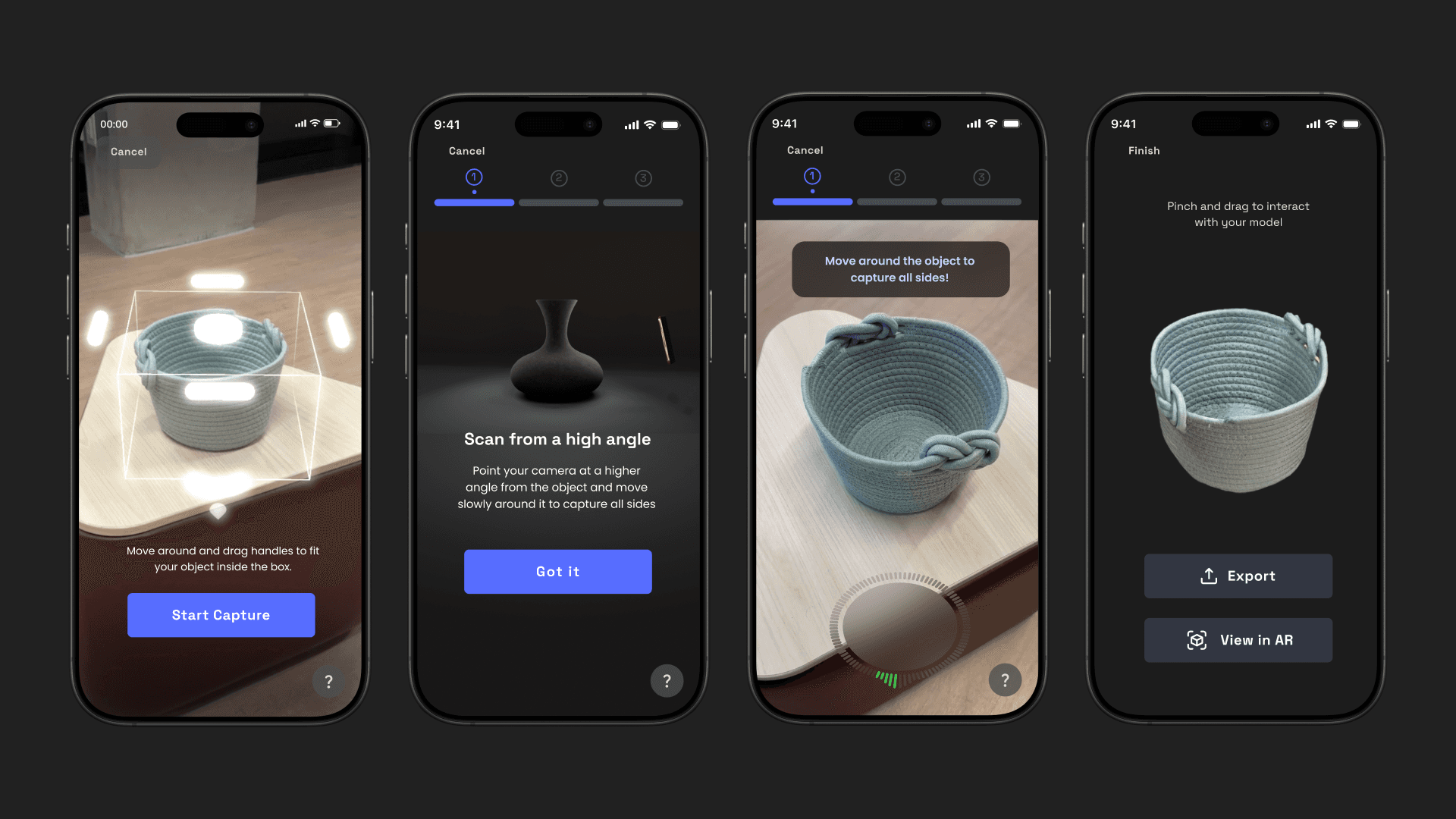
User Research and Design for an AR-based mobile app to smoothen the learning curve and increase user confidence for capturing objects in 3D with the phone camera.
Industry-academic collaboration for an SFU course, IAT 333: Interaction Design Methods.
The Problem
Users struggled to start and finish a 3D scan, due to lack of guidance, vague instructions and unintuitive interface design.
Outcome
A consistent interface design with a simplified user flow, improved instructions and guidance through 3D animations and UX Writing.
My Role
Along with conducting user research, I led my team in collaborations with Co-founders (a Product Manager and Developer), presenting research findings, insights and actionable product recommendations.
I also led the interface design strategy to help Polymuse build credibility and stand out from its competitors.
CONTEXT: About the client
Polymuse is a mobile app that helps online retailers and designers generate digital 3D models of real-life objects.
Real-life chair to interactive 3D model
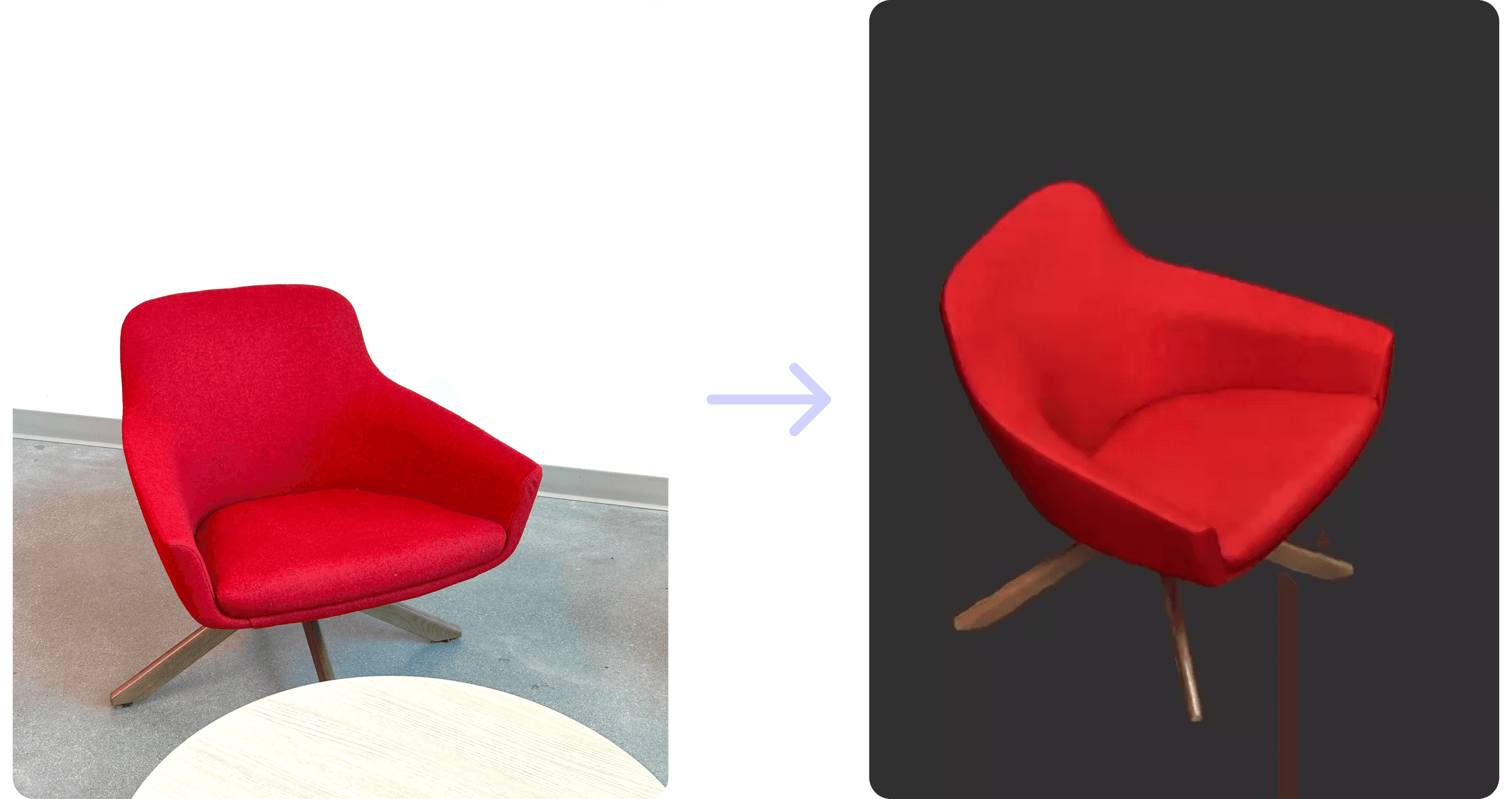
Overview of Polymuse's current 3D visualisation process, from scanning to viewing the model in AR in your own space.
Overview of Polymuse's current 3D visualisation process, from scanning to viewing the model in AR in your own space.
Starting from 0: Understanding what people think about Augmented Reality in online shopping.
To understand the domain of AR in E-Commerce better, I conducted a survey to get answers to our research goal: To understand what consumers and business owners feel about AR view of products on online shopping platforms.
27 Respondents
Quantitative Data
Screened their age and possible AR experiences through MCQs.
Qualitative Data
Written responses of AR experiences in online shopping, including challenges and perceived value of AR .
71%
Unclear Communication of AR’s Value
Believe AR’s potential to grow their business is vague and unconvincing.
47%
Disconnect Between Retailers and Consumers
Uncertain if AR services effectively enhance sales, while others are excited about its potential.
29%
Challenges with AR Visualization Quality
View products less favourably when AR visualizations are low quality, which can deter sales.
82%
Misconceptions About Cost and Complexity
Misconception that AR technology is expensive and difficult to implement.
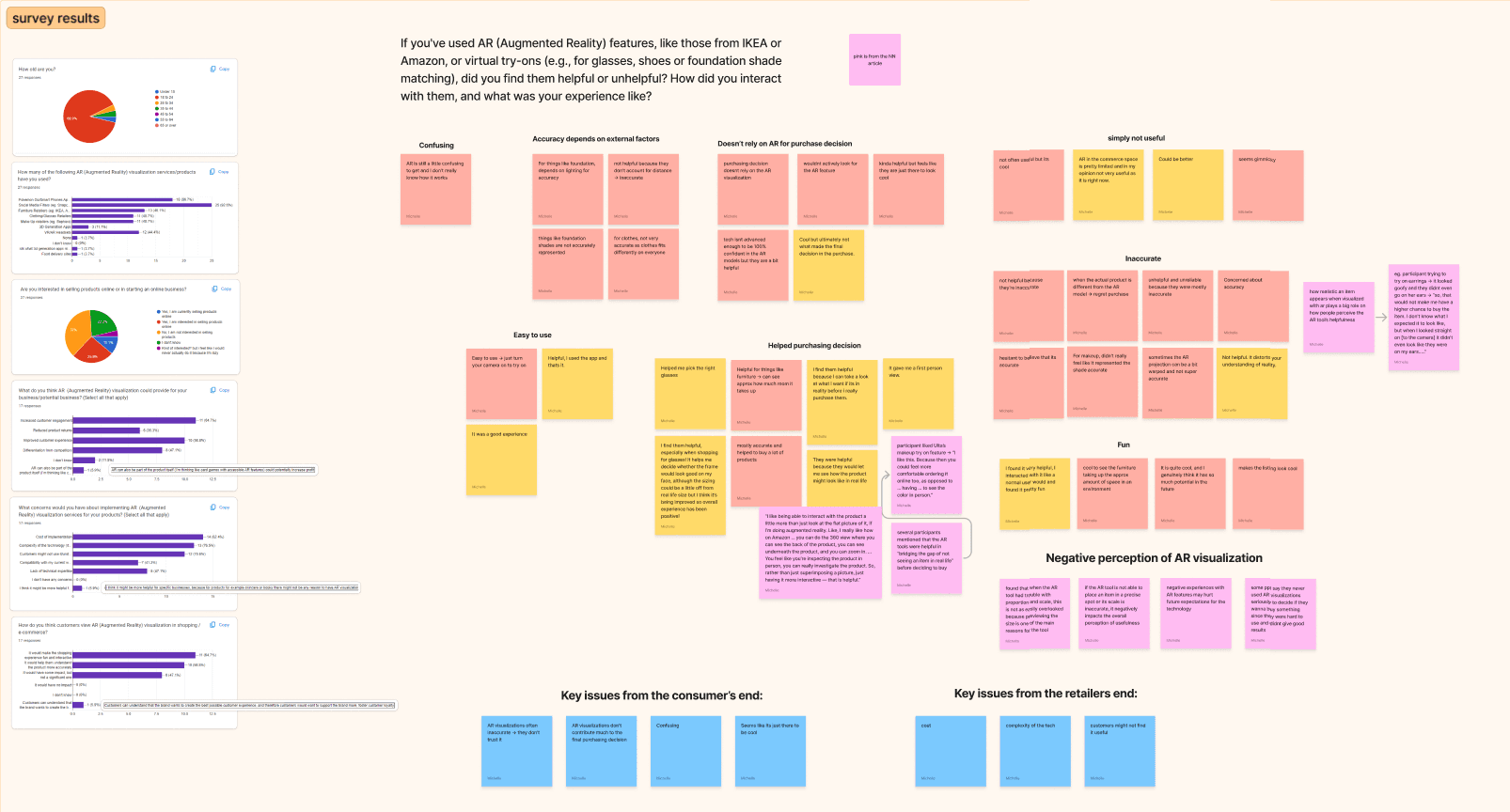
Affinity Mapping to organise the overwhelming amount of qualitative and quantitative data, and to understand common patterns in respondent's thinking.
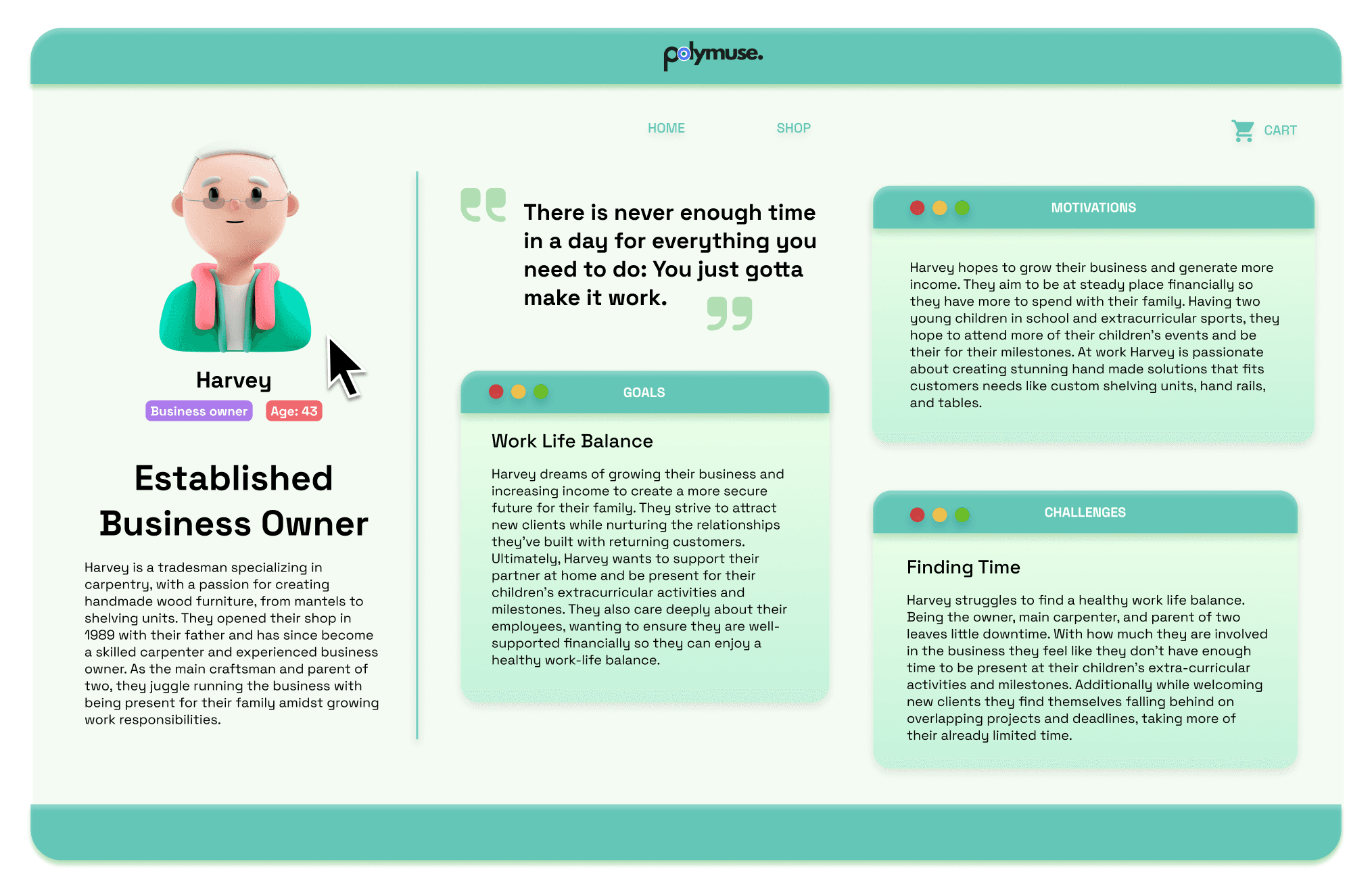
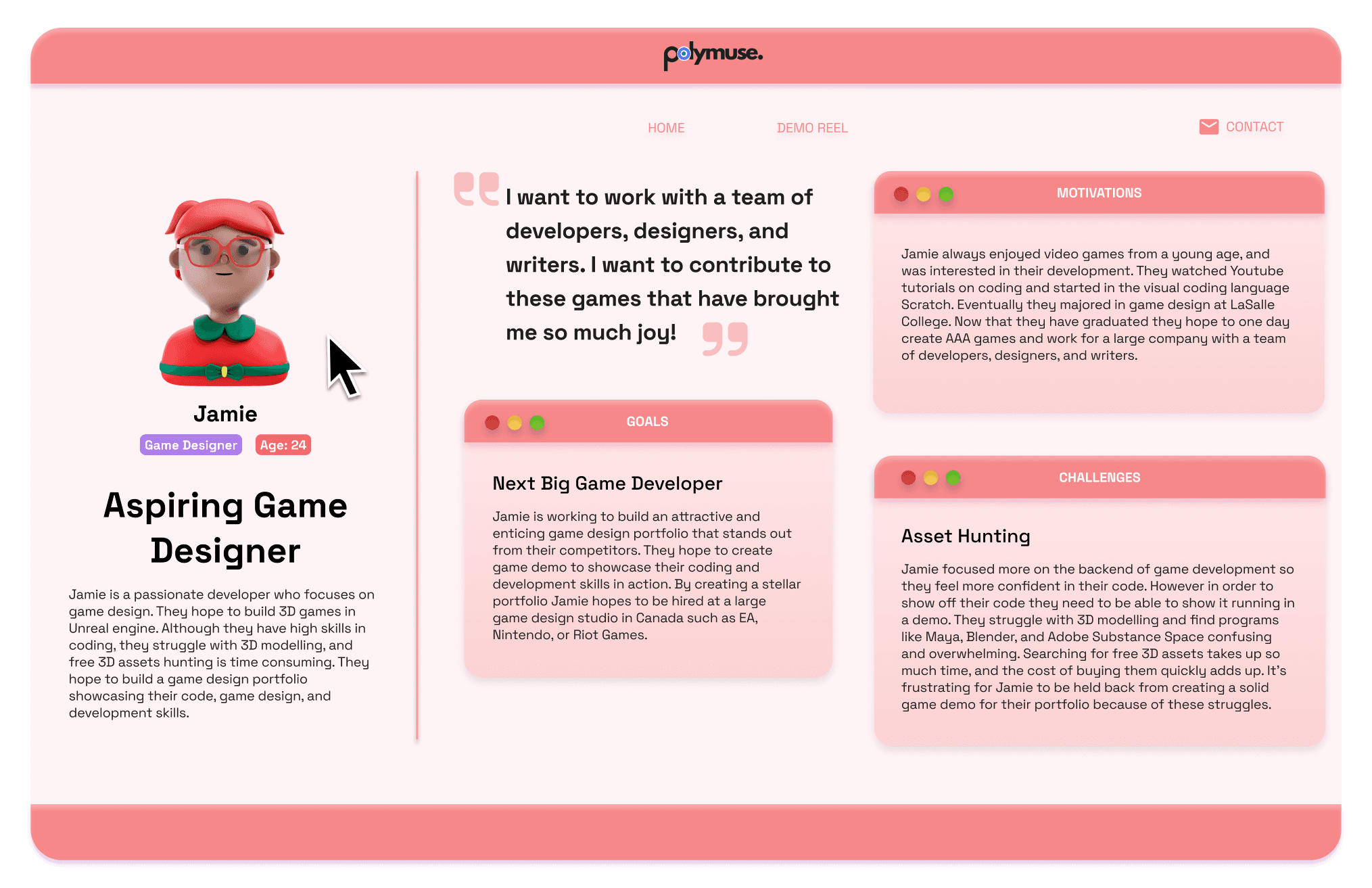
Empathising through personas — Harvey and Jamie
The two personas reflect Polymuse's broad audience demographic, and helped us clarify who we were designing for.
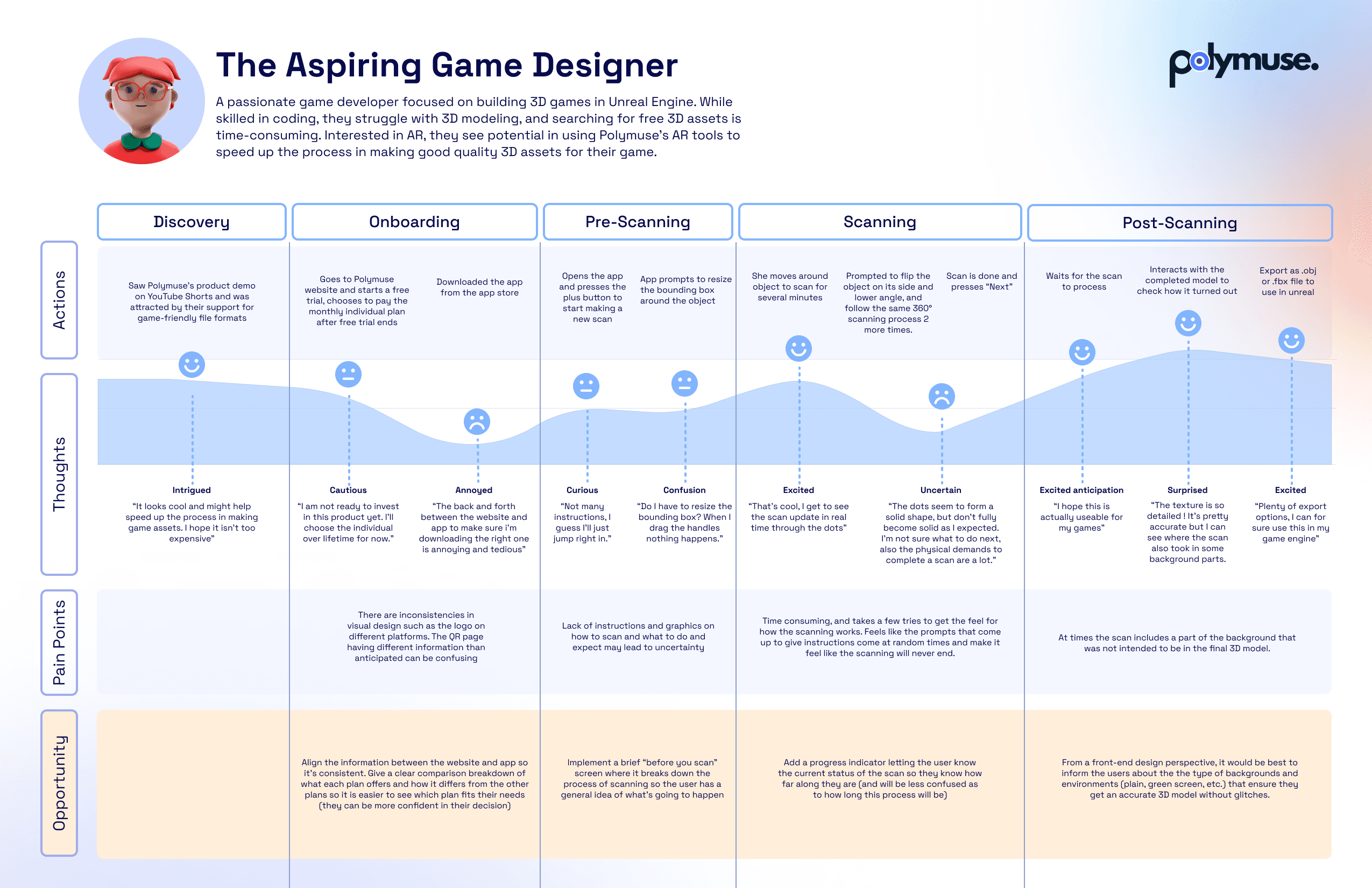
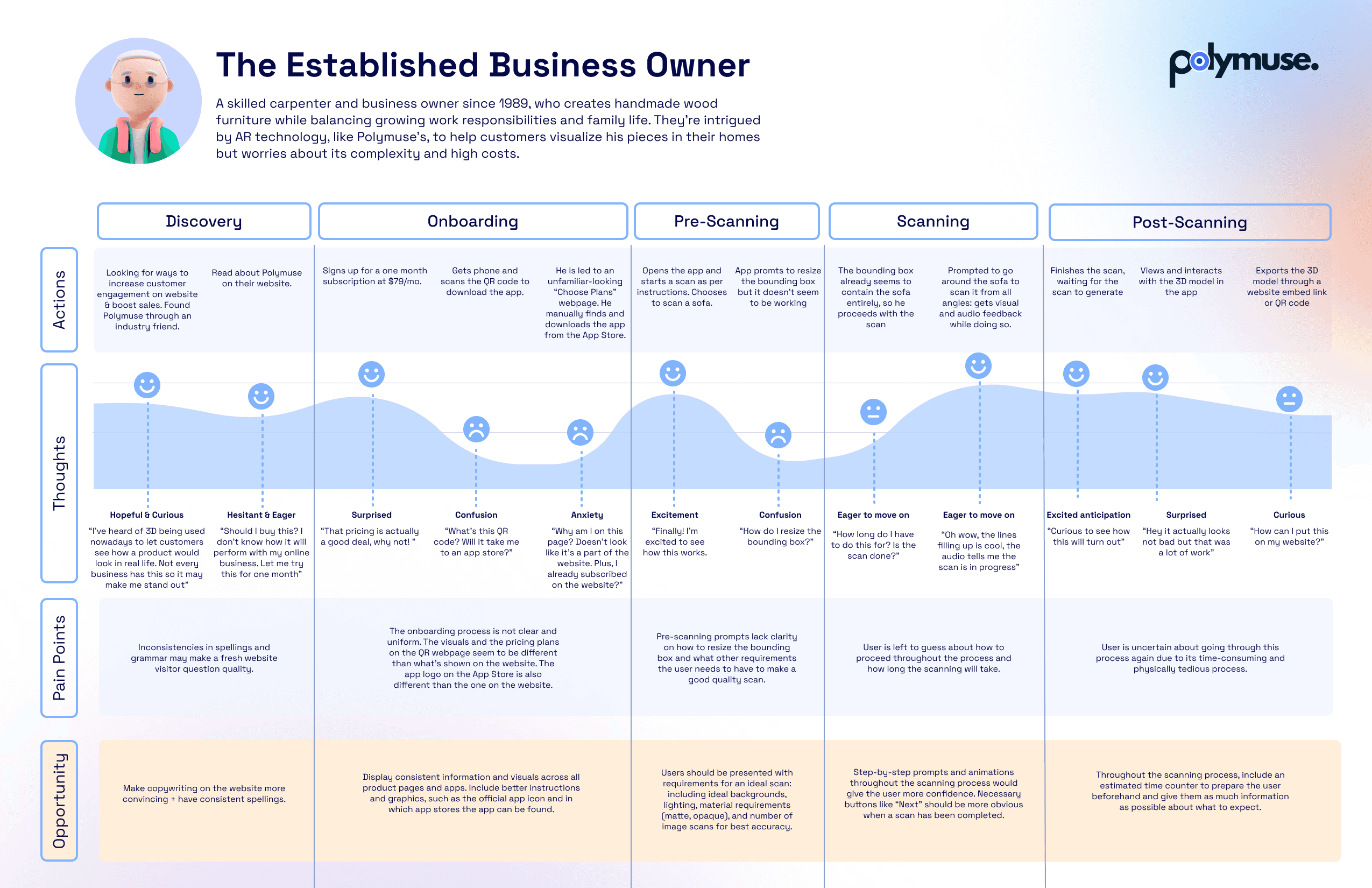
Journey Mapping to see patterns in the bigger picture
Harvey and Jamie interacted with Polymuse as an overall product, from discovery to onboarding and using the app.
Visualing this process helped us find common user behaviour patterns and find crucial pain points to inform our design decisions.
Common Pain Points
Most pain points occured during the onboarding and 3D scanning process. However, we chose to focus on the 3D scanning process, because their users were ultimately paying monthly for a product that was unable to complete its core goal, which would cost Polymuse money and users.
1
Confusing website-to-app onboarding process
2
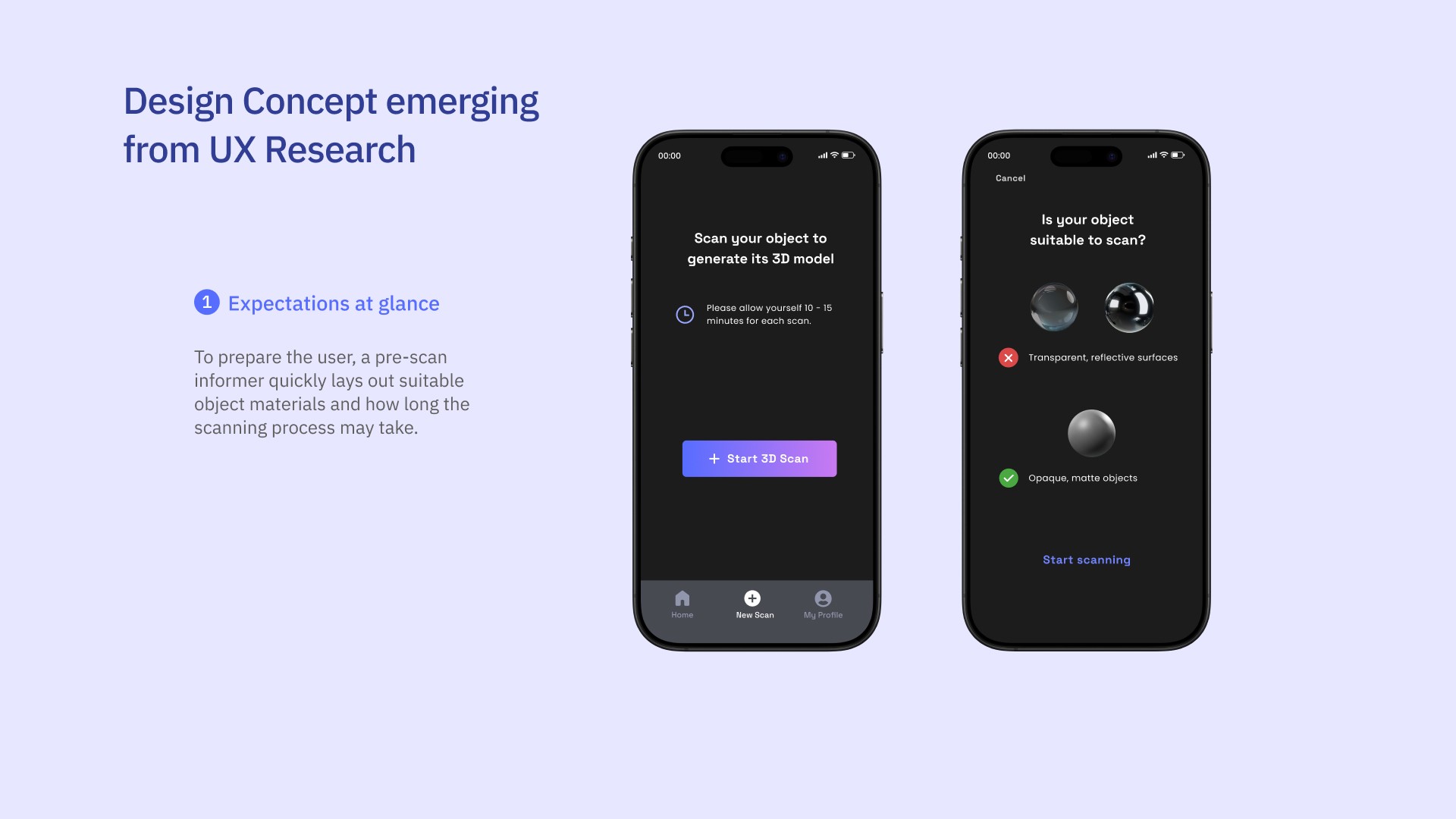
Unclear expectations about object requirements
3
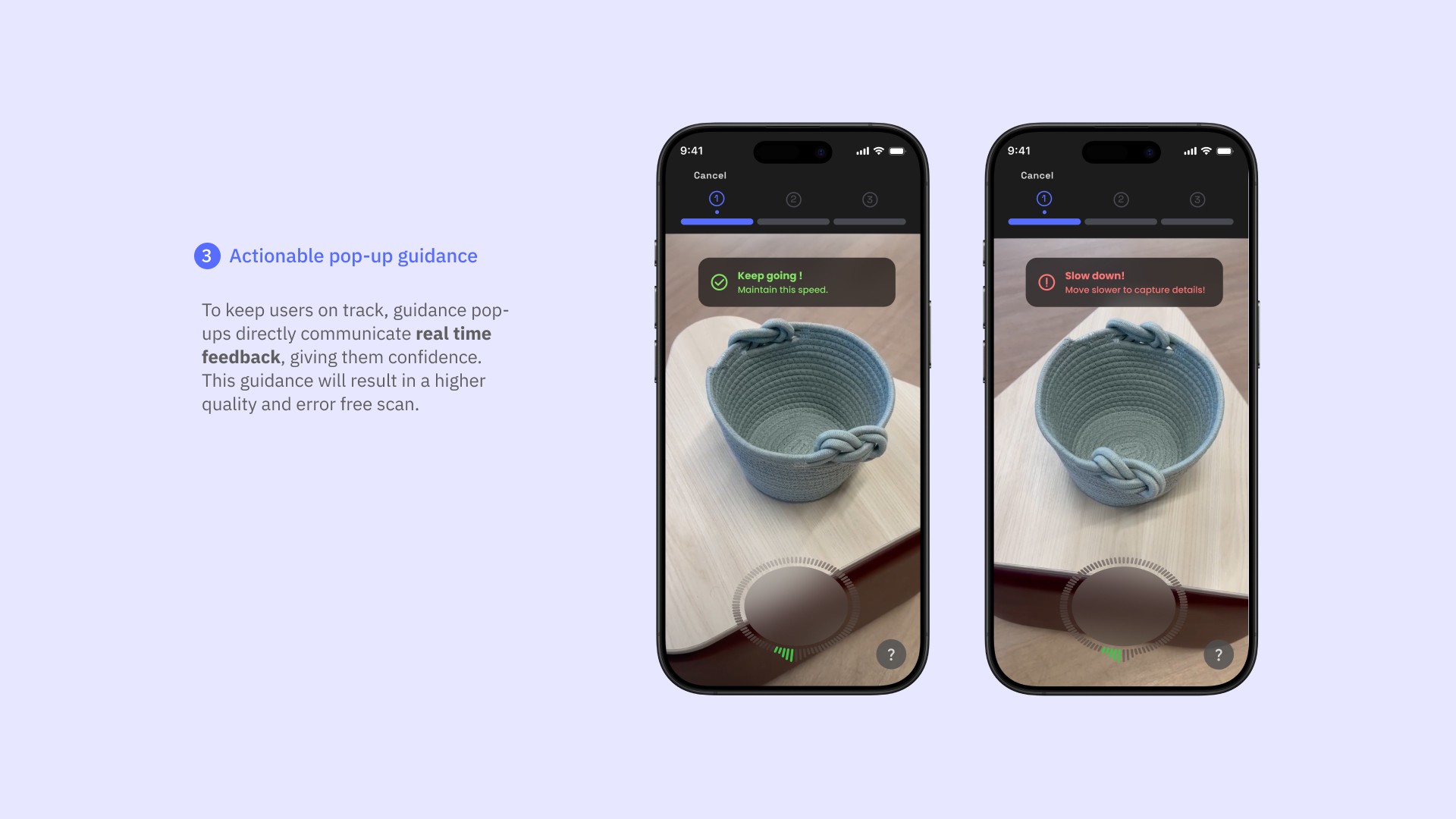
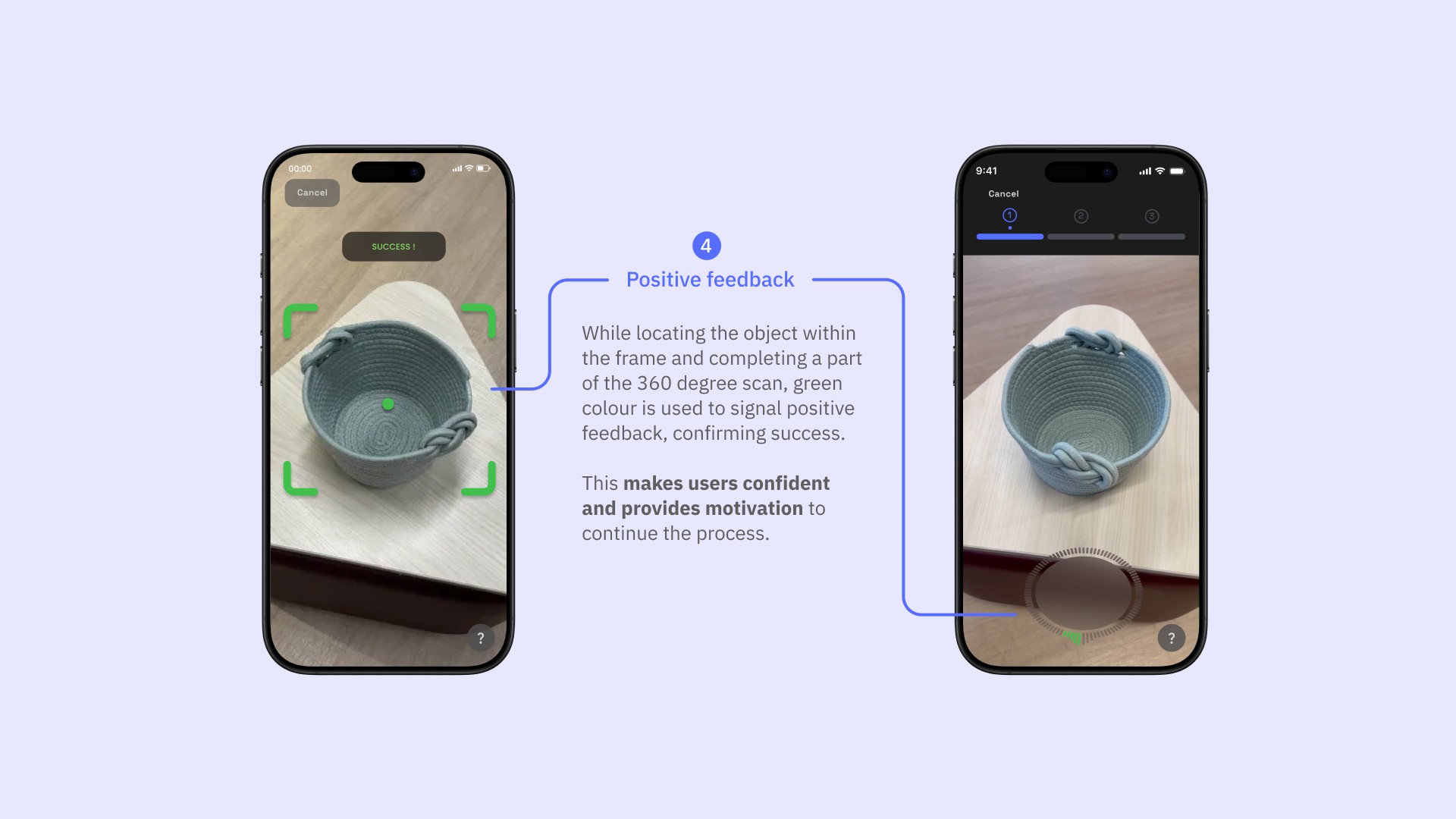
Limited 3D scanning guidance
However, these pain points were still too different and broad to form a focused UX design opportunity within the given time frame.
🔎 Usability Testing their app, to get laser-focused pain points
Group usability testing was conducted with 6 users to get specific insights and pain points in the app.
FINDINGS
Inconsistent UI Design confused users and made it harder to complete the 3D scan smoothly.
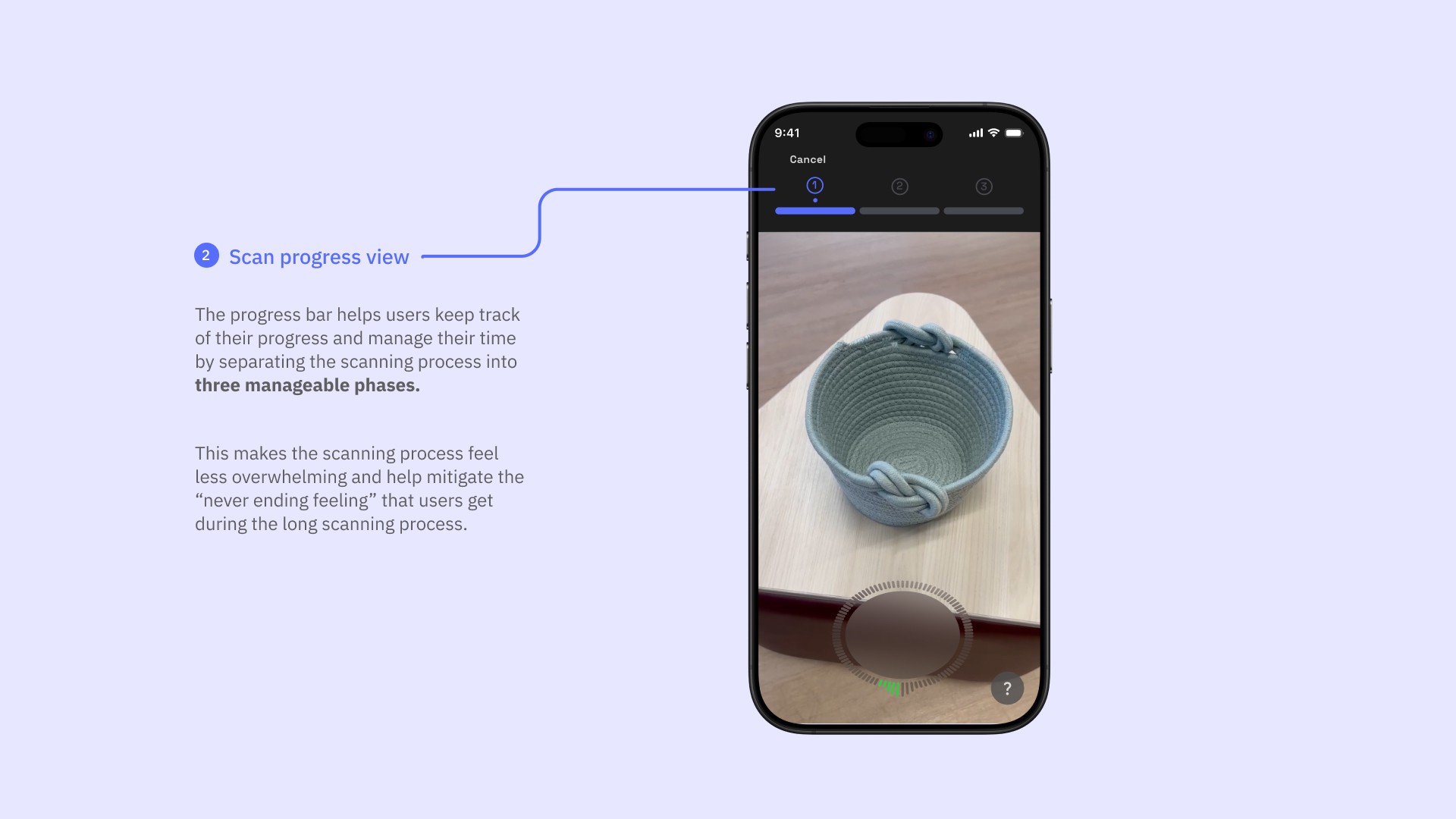
Users found the 3D scanning process long and tedious, and did not know when it would end.
There were lack of instructions to guide users on how to complete a successful 3D scan.
Design Statement
How might we redesign Polymuse’s app interface and make the 3D scanning process easy to understand for E-Commerce retailers so that they can generate good 3D models of their products ?